Limited Time Offer – Save 25%

Lifestyle, fertility and the importance of cortisol
One of the most common questions I encounter from people facing fertility difficulties is simple: How can I improve my chances of a healthy conception? The answer, of course, is complicated. Many factors combine to determine whether conception is successful — and not all of them can be changed. But some can. And cortisol is one of the most important and least discussed.
What can actually be changed?
For women, age and ovarian reserve are critical — and fixed. For men, sperm quality matters enormously. Some conditions can be treated directly; others can be circumvented, for example through IVF. But even where fixed factors exist, ensuring the body is in its healthiest possible state maximises the chance of conception — whether naturally or with assisted treatment.
That's why fertility specialists talk about 'preparing' for treatment. One of the most impactful and underestimated ways to prepare is through lifestyle — and lifestyle's influence on cortisol is central to that.
"Obviously not all causes of fertility problems can be solved by making lifestyle changes, but it is important to recognise that any approach to conception can be improved by ensuring you're in the best of health; lifestyle and the chance of a healthy conception are linked."
Cortisol, your lifestyle and fertility
Cortisol is a glucocorticoid steroid hormone essential for overall health — including reproductive health. It's perhaps best known as the 'stress hormone', but its role is far broader: it regulates the immune system, maintains blood pressure, supports brain health, and is fundamental to many reproductive functions.
Cortisol production is affected by lifestyle factors including diet quality, exercise habits, and sleep patterns. Transient high or low levels are normal. The problem is a sustained pattern of suboptimal or excessive cortisol over weeks and months — which is exactly what the body experiences under chronic stress.
Getting to know your HPA axis
The Hypothalamic-Pituitary-Adrenal (HPA) axis controls the release of cortisol and also regulates the hormones that govern ovarian, uterine, and testicular function — including gonadotropin releasing hormone (GnRH), luteinising hormone (LH), and follicle stimulating hormone (FSH).
When the HPA axis is dysregulated, production of these critical reproductive hormones is suppressed. This creates a direct biological pathway from chronic stress to impaired fertility — not a vague connection, but a specific hormonal mechanism.
During pregnancy, cortisol is also essential for foetal development. Research has shown that foetal exposure to suboptimal cortisol levels can have lasting effects on neuroendocrine function and health across the child's life.
Why sustained cortisol matters more than a single reading
If you're preparing for IVF or trying to conceive naturally, a one-off blood or saliva cortisol test on the morning of a clinical appointment has limited value. Cortisol fluctuates dramatically throughout the day and in response to acute stress — including the stress of a medical appointment itself. A normal reading that day doesn't tell you what your cortisol has been doing for the past three months.
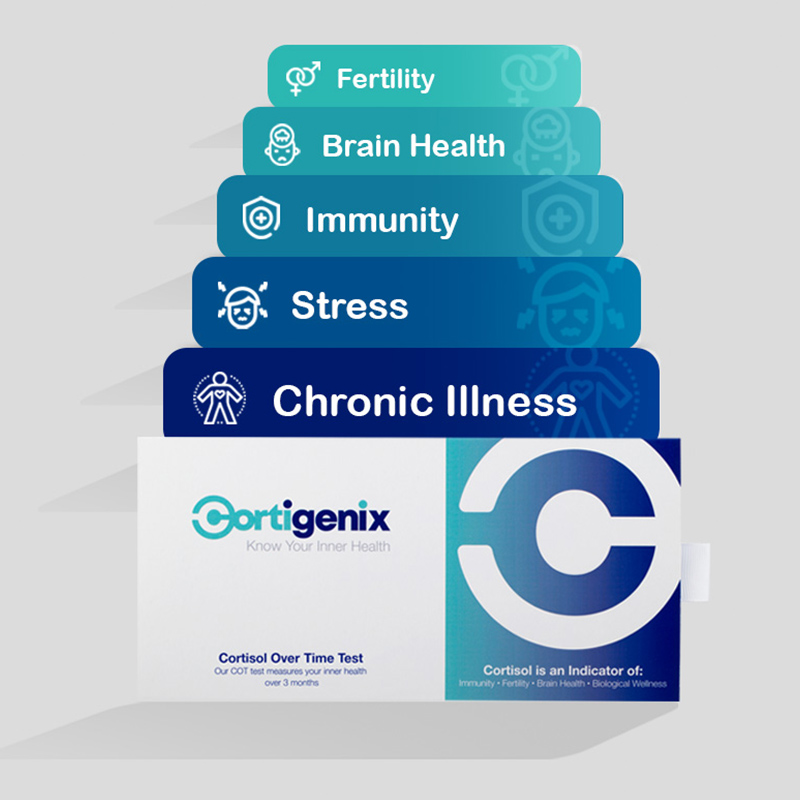
Hair cortisol testing solves this. By measuring the cortisol that has accumulated in the hair shaft over the preceding three months, it provides a reliable baseline that reflects your sustained hormonal environment — the environment in which conception either succeeds or doesn't.
Research published by Massey et al. (2016) in Psychoneuroendocrinology found that hair cortisol levels — but not saliva cortisol at a single time point — predicted IVF outcomes. The implication is clear: it's sustained cortisol exposure, not a single-day reading, that matters.
Taking control of your fertility journey
For people facing fertility difficulties, or simply wanting to give themselves the best possible chance of conception, hair cortisol testing provides the most accurate and comprehensive view of whether stress hormones may be affecting their long-term health and fertility.
Understanding your cortisol levels gives you something concrete to act on — whether through lifestyle changes, targeted interventions, or simply having a more informed conversation with your fertility specialist.
Ready to check your cortisol levels?
One hair sample. A 3-month average. Results in your secure dashboard within 10 days.
Order your test – £126.75References
Massey, A. J. et al. (2016). Relationship between hair and salivary cortisol and pregnancy in women undergoing IVF. Psychoneuroendocrinology, 74, 497–405.
Massey, A. J. et al. (2014). The association of physiological cortisol and IVF treatment outcomes: A systematic review. Reproductive Medicine and Biology, 13, 161–176.